 blog
Alternatives to Surgery for Degenerative Disc Disease
Last Updated: November 4, 2026
Quick Summary
Alternatives to surgery for degenerative disc disease include chiropractic care, non-surgical spinal decompression, shockwave therapy, epidural steroid injections, ablation and medication management Most patients should start with one therapy and add one intervention at a time, reassessing against measurable goals every six to eight weeks.
- Nearly 23% of spinal fusion patients develop problems at adjacent segments within a decade, per UC Davis Health's 2026 review.
- Lumbar fusion's advantage over non-operative care largely faded by two years in a Swedish randomized trial.
- Radiofrequency ablation relief commonly lasts six to twelve months, and the procedure can be repeated.
- Most insurers expect at least six weeks of structured treatment before approving injections or ablation.
- Escalate to surgical evaluation for progressive weakness, bowel or bladder changes, or saddle numbness.
Table of Contents
- Why Patients Look for Alternatives to Surgery for Degenerative Disc Disease
- Non-Surgical Spinal Decompression Benefits for Bulging and Herniated Discs
- Shockwave Therapy for Back Pain and Other Regenerative Options
- Injections, Medications, and Radiofrequency Ablation as Non-Surgical Options
- Therapy for Degenerative Disc Disease: Building Strength Around the Disc
- Planning Your Non-Surgical Treatment Path in Plymouth
- Frequently Asked Questions
Why Patients Look for Alternatives to Surgery for Degenerative Disc Disease
Surgery is not the only path through degenerative disc disease, and for many people it is not the best one. Nearly 23% of patients who undergo spinal fusion develop further problems in the spinal segments above and below the operation site within a decade, according to UC Davis Health's 2026 review of spinal implant research.
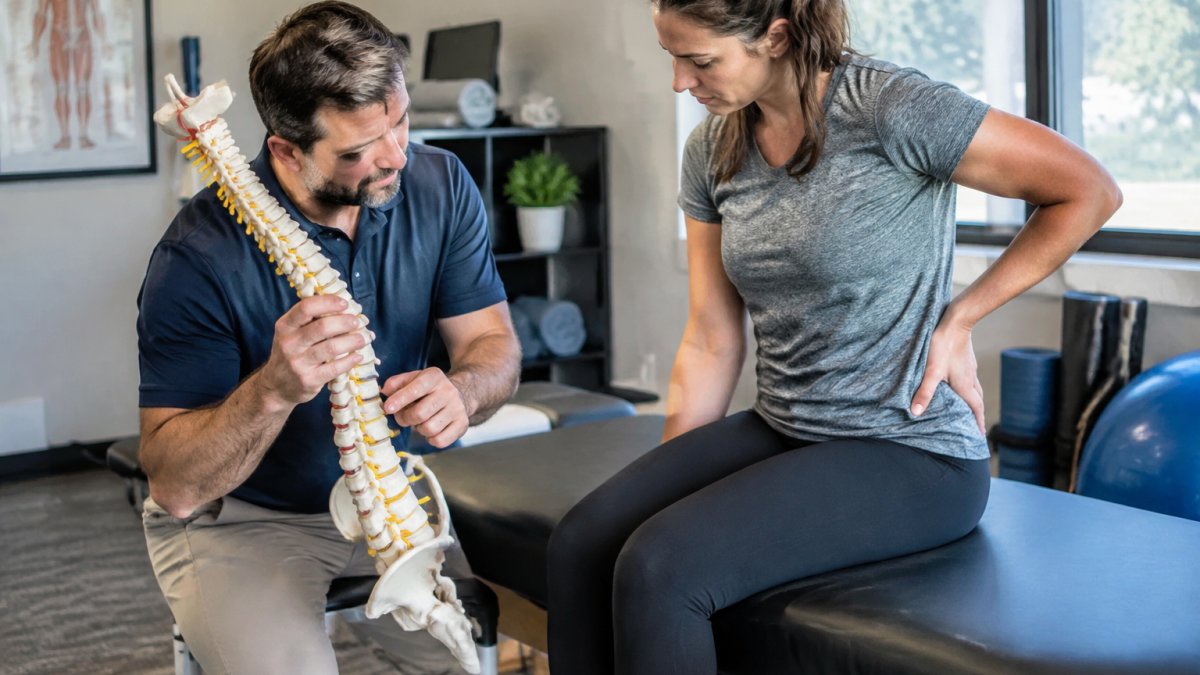
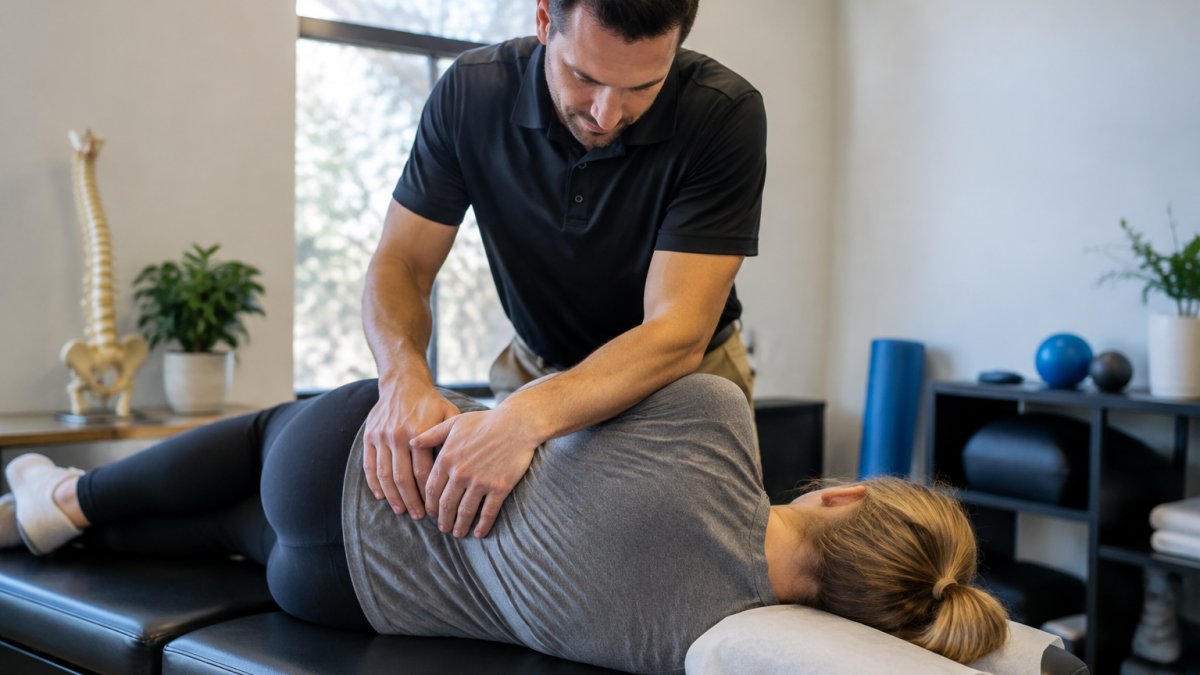
At Minnesota Chiropractic and Rehabilitation, we provide non-invasive chiropractic and rehabilitation care for disc-related pain. We are not anti-surgery; we believe in evaluating each patient carefully before recommending any path.
Here is the honest picture. A Swedish randomized trial found that lumbar fusion's advantage over non-operative care was greatest at one year and had largely faded by two years (Swedish Randomized Trial, 2013).
If you want to manage pain without an operation, start with how to relieve chronic back pain at home while you research your options.
Non-Surgical Spinal Decompression Benefits for Bulging and Herniated Discs
Non-surgical spinal decompression is a traction-based treatment delivered on a motorized table with controlled force and angle. It is offered at our practice as one component of non-invasive care for bulging and herniated discs.
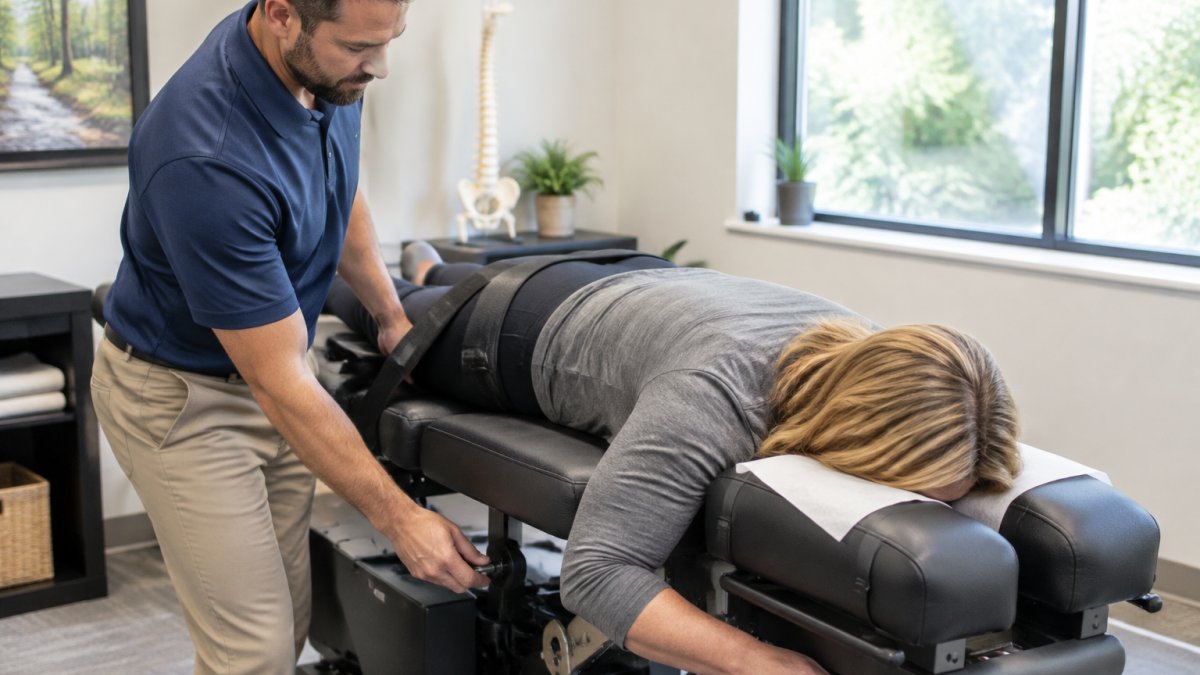
If decompression sounds like a fit, you can learn about spinal decompression therapy.
Shockwave Therapy for Back Pain and Other Regenerative Options
Shockwave therapy for back pain uses acoustic pressure waves applied to soft tissue. It is a non-invasive option that may be discussed with your provider for certain soft tissue concerns.
Regenerative medicine is the broader category. National Institutes of Health research on bioactive therapies describes stem cell-based treatments as a potential way to target the degenerative process itself rather than just the pain.
If you want the details on the service, read about shockwave therapy and how a typical course is scheduled.
Injections, Medications, and Radiofrequency Ablation as Non-Surgical Options
These options sit between physical therapy and surgery. None of them repairs a degenerated disc. What they can do is reduce pain enough that you can move, sleep, and participate in rehabilitation, which is where the durable gains come from. Match the intervention to the pain generator rather than stacking every option at once.
Epidural steroid injections
An epidural steroid injection delivers a corticosteroid and a local anesthetic into the epidural space, near the inflamed nerve root. The steroid suppresses inflammation around the nerve; the anesthetic provides immediate feedback on whether the target was correct. Relief typically lasts weeks to a few months, long enough to bridge a flare and let therapy progress.
- Best for: radicular pain (pain traveling down the leg) from a disc herniation or foraminal stenosis, especially when a flare is blocking rehabilitation.
- Skip if: you have an active infection, uncontrolled diabetes (steroids can raise blood glucose), a bleeding disorder, or you are on anticoagulation without a plan to pause it.
- Watch out: repeat injections are typically limited because each dose carries small risks of infection, dural puncture, and steroid-related effects; a common pattern is no more than three in a year at a given level, with diminishing returns.
Medication management
Medications are supportive, not curative. The realistic roles break down by drug class:
- NSAIDs (ibuprofen, naproxen, meloxicam) reduce inflammation and pain. Appropriate for short-to-medium term use in patients without kidney disease, peptic ulcer history, or cardiovascular risk factors.
- Muscle relaxants (cyclobenzaprine, tizanidine) help with spasm-associated pain and sleep, but cause drowsiness and are not a daytime long-term strategy.
- Neuropathic agents (gabapentin, pregabalin, duloxetine) target nerve-mediated pain. They require titration and monitoring for side effects.
A common pattern is that medications buy comfort while therapy does the work. If you are still on daily opioids months into care, that is a signal to revisit the plan, not to escalate the dose.
Radiofrequency ablation
Radiofrequency ablation (RFA) uses a heated probe to create a small lesion in the medial branch nerves that carry pain signals from the facet joints. It is typically preceded by a diagnostic medial branch block: if two blocks produce substantial temporary relief, the ablation is more likely to work. Relief commonly lasts six to twelve months, and the nerves regenerate, so the procedure can be repeated.
- Best for: facet-mediated pain, pain that worsens with extension and rotation, is located paraspinally, and is not primarily radicular.
- Skip if: your pain is clearly discogenic or radicular rather than facet-mediated, or if diagnostic blocks did not relieve it.
- Watch out: RFA treats the pain signal, not the disc; it does not change the underlying degeneration, and it should not be used to delay evaluation of progressive neurological symptoms.
Therapy for Degenerative Disc Disease: Building Strength Around the Disc
Therapy for degenerative disc disease is a widely recommended first step, and it targets the muscles that support the disc rather than the disc itself. The core, hips, and back muscles can help support.
A good program usually includes:
- Core stabilization, starting with gentle isometric holds
- Hip and glute strengthening to take load off the lumbar spine
- Graded mobility work for the thoracic spine
The catch: therapy helps most when it is consistent and progressed. Two weeks of exercises followed by nothing is why so many people say therapy "didn't work."
Minimally invasive procedures between injection and open surgery
Two procedures worth knowing about sit in the gap between injections and fusion:
- Basivertebral nerve ablation (the Intracept Procedure) targets the basivertebral nerve, which carries pain signals from the vertebral endplates. It is intended for chronic vertebrogenic low back pain, a specific diagnosis confirmed by MRI findings of Modic changes, and is not appropriate for radicular or facet pain.
- Intradiscal biologic injections (such as VIA Disc) deliver processed disc tissue or other biologics into a degenerated disc. Evidence is still developing; ask for the provider's own outcome data and understand that insurance coverage varies widely.
How these options compare
Option | What It Does | Typical Relief Duration | Typical Role |
|---|---|---|---|
Epidural steroid injection | Reduces nerve-root inflammation | Weeks to a few months | Flare control to enable therapy |
NSAIDs / neuropathic agents | Manages pain and inflammation | While taken | Short-to-medium term support |
Radiofrequency ablation | Blocks facet pain signals | Six to twelve months | Facet-mediated chronic pain |
Basivertebral nerve ablation | Blocks endplate pain signals | Studied at one year and beyond | Vertebrogenic pain with Modic changes |
Intradiscal biologics | Aims at the disc itself | Variable; evidence developing | Selected discogenic cases |
Who is this for? A quick candidacy check
Use these questions to self-segment before a consultation:
- Is your pain mostly in the back, or does it travel down the leg? Leg-dominant pain points toward nerve-root options; back-dominant pain points toward facet or endplate evaluation.
- Does extension and rotation worsen it? That pattern suggests facet-mediated pain and makes RFA worth discussing.
- Have you had an MRI in the last year? Endplate changes, disc herniation, and stenosis each steer the plan in different directions.
If conservative care has not resolved symptoms, a qualified provider can discuss further evaluation options with you. If you have progressive weakness, bowel or bladder changes, or saddle numbness, none of them are appropriate, that is an urgent surgical evaluation.
Planning Your Non-Surgical Treatment Path in Plymouth
Treatment plans are typically individualized and reviewed against measurable goals as care progresses.
A stepwise framework
- Establish the diagnosis. A focused exam plus imaging review (MRI if not already done) to identify whether the dominant pain is discogenic, radicular, facet-mediated, or vertebrogenic.
- Set a measurable goal and a review date. Examples: walk 30 minutes without stopping, sleep through the night, return to a specific work task. Review at four to six weeks.
- Start with the highest-evidence, lowest-risk layer. Structured physical therapy and activity modification first, unless a flare is severe enough to justify an injection to enable therapy.
- Add one intervention at a time. Adding decompression, shockwave, or an injection simultaneously makes it impossible to know what helped.
- Reassess against the goal. If met, taper support and maintain. If not, change the target, not just the intensity.
Long-term outcomes: what the comparisons actually show
Patients often ask how conservative care compares with surgery over time. The answer depends on the individual diagnosis:
- Lumbar fusion versus structured non-operative care for degenerative disc disease: randomized trial data have generally shown an early advantage for fusion that narrows substantially by two years, with outcomes converging over time. The risks do not converge, surgery carries perioperative and adjacent-segment risks that conservative care does not.
- Discectomy versus conservative care for radicular pain from a herniation: surgery typically produces faster relief of leg pain, while a substantial share of patients managed conservatively improve over weeks to months. One-year outcomes are closer than the early ones.
- Artificial disc replacement versus fusion: both are surgical options; the comparison is between two operations, not between surgery and non-surgery, and long-term revision data are still maturing.
A common pattern in practice: patients who do well long-term with conservative care are the ones who keep a maintenance program after symptoms improve, rather than stopping when pain resolves.
The psychological side of chronic back pain
Chronic pain is not only a tissue problem. Fear of movement, sleep disruption, and catastrophizing about the spine are well-recognized contributors to disability, and they respond to specific strategies:
- Graded exposure, gradually returning to feared movements rather than avoiding them.
- Pain education, understanding that disc changes on MRI are common in people without pain reduces fear.
- Sleep and stress routines, consistent sleep timing and stress-reduction practices measurably affect pain tolerance.
Addressing these alongside physical care is not soft add-on; it is part of the treatment.
When to consider surgery instead
Non-surgical care is the right default, but not an absolute. Escalate to a surgical evaluation when:
- Progressive motor weakness (for example, foot drop) is present.
- Bowel or bladder dysfunction or saddle anesthesia appears, this is urgent.
- Pain is severe and disabling despite a well-run conservative trial of at least six to twelve weeks.
If you are ready to start, back pain treatment begins with an assessment. You can also contact our team with questions about scheduling, insurance verification, or what to bring.
Frequently Asked Questions
Can you live with degenerative disc disease without surgery?
Many people do. Published research comparing lumbar fusion with non-operative care has generally found the early surgical advantage narrows over time. Conservative treatment such as therapy, targeted exercise, and pain management helps many patients manage symptoms without an operation. A qualified clinician can assess your imaging, neurological function, and goals to advise whether non-surgical care is appropriate for your case.
What are the most effective non-surgical treatments for chronic disc pain?
Non-surgical approaches for disc-related pain vary, and the appropriate option depends on your individual condition. A clinical evaluation with a qualified provider is the best way to determine which care is right for you.
How does non-surgical spinal decompression work for disc issues?
Spinal decompression is a traction-based treatment delivered on a motorized table. It is not appropriate for every patient, so a provider should review your imaging and history first.
Chronic disc pain is exhausting, and the surgery-or-nothing conversation leaves too many people stuck. Minnesota Chiropractic and Rehabilitation offers another route: non-surgical spinal decompression, shockwave therapy, and physical rehabilitation built around the root cause of your pain. Get started with Minnesota Chiropractic and Rehabilitation and find out what non-invasive care can do for your back.