 blog
7 Ways to Prevent Work-Related Back Injuries
Last Updated: November 4, 2026
Quick Summary
You can prevent work-related back injuries by following OSHA ergonomics guidance, using proper lifting techniques every shift, and setting up ergonomic workstations for office and home. Bend the knees, keep the back straight, hold loads close, and never twist while carrying. Repeat lifting training regularly rather than delivering it once.
- Work-related back injuries cause 128,220 lost-time cases and $13.7 billion in annual employer costs.
- Under OSHA guidance, employers should identify tasks forcing repeated reaching, leaning, twisting or bending.
- Run a brief lift demo at the start of each shift because training fades without regular practice.
- Set the screen at eye level, keep elbows near 90 degrees, and put feet flat on the floor.
- At least one-third of compensable back injuries are preventable through better job and workstation design.
Table of Contents
- 1. Follow OSHA Back Safety Guidelines and Assess Workplace Hazards
- 2. Use Proper Lifting Techniques for Employees Every Shift
- 3. Apply Ergonomic Workstation Setup Tips for Office and Home
- Frequently Asked Questions
1. Follow OSHA Back Safety Guidelines and Assess Workplace Hazards
Work-related back injuries cause 128,220 lost-time cases and $13.7 billion in annual employer costs, per DSpine Center's 2026 injury statistics. Under OSHA's ergonomics guidance, employers should identify tasks forcing repeated reaching, leaning, twisting or bending, then fix the task first.
Walk the floor, list every lift, carry and twist with weights and repetition rates, and ask workers which tasks hurt.
If a back injury is already work-related, use our workers' comp intake form to start the claim, and we provide back pain treatment for the strain that follows.
2. Use Proper Lifting Techniques for Employees Every Shift
Proper lifting techniques for employees are the cheapest injury prevention you will ever buy: bend the knees, keep the back straight, hold the load close, and never twist while carrying. The NIOSH research on safe lifting programs found these programs reduce injuries over the long term when training is repeated, not delivered once.
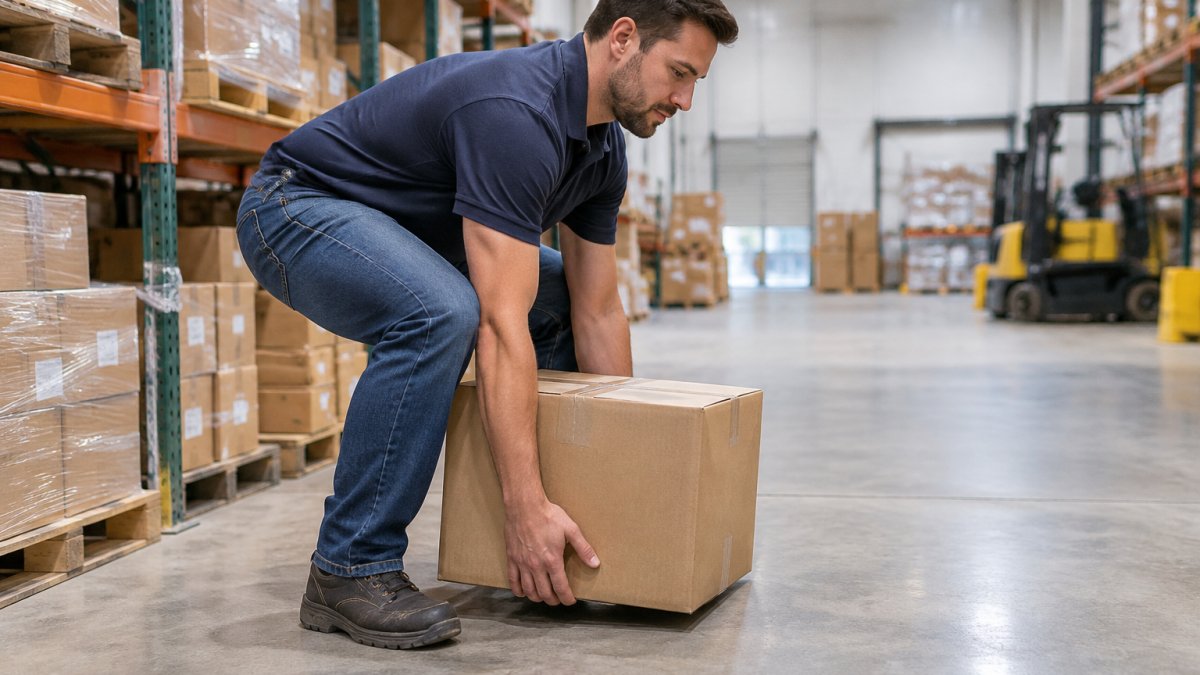
Training tends to fade without regular practice, so consider running a brief lift demo at the start of each shift. For lingering pain, our guide on how to relieve chronic back pain at home covers practical steps between shifts.
Proper lifting technique comes down to a few simple habits repeated every shift.
Technique | What to do |
|---|---|
Bend the knees | Lift with the legs, not the back |
Keep the back straight | Maintain a straight back while lifting |
Hold the load close | Keep the load close to the body |
Never twist | Do not twist while carrying |
Repeat training | Run a brief lift demo at the start of each shift |
3. Apply Ergonomic Workstation Setup Tips for Office and Home
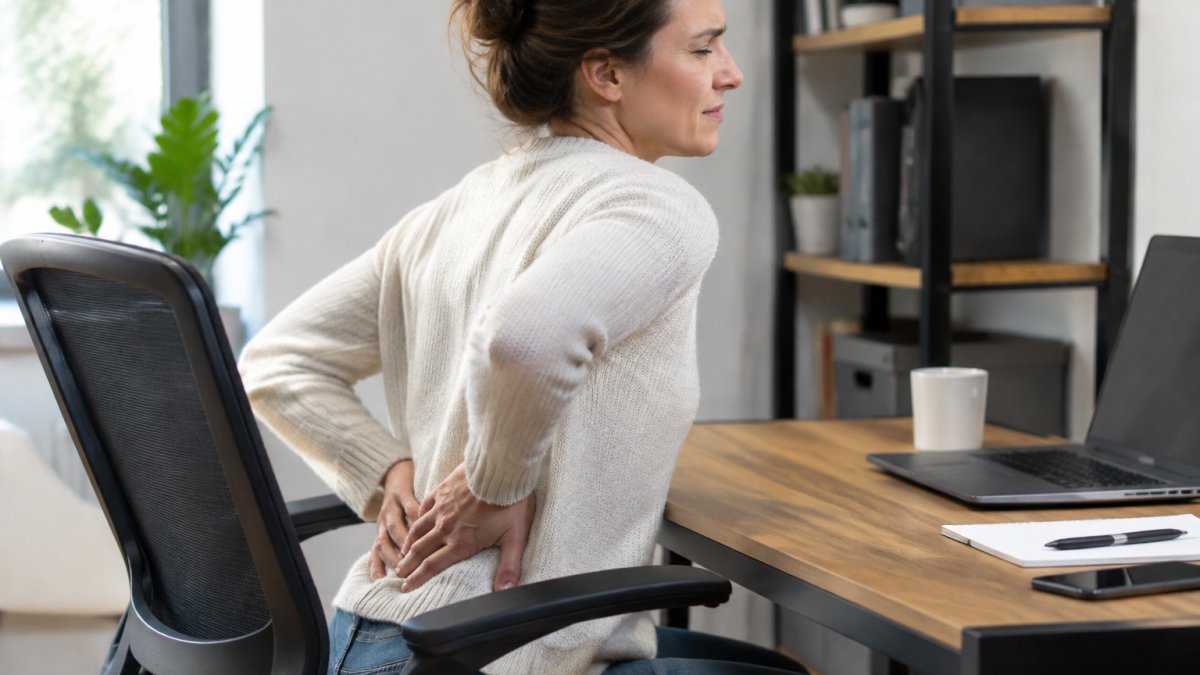
Ergonomic workstation setup matters for people who work from home as well as in traditional offices. Set the screen at eye level, keep elbows near 90 degrees, support the lower back, and put feet flat on the floor. Maintaining these neutral postures throughout the day serves as a primary defense, though incorporating movement remains essential when you need to manage back pain at work.
The University of Maryland's ergonomics fact sheet estimates at least one-third of compensable back injuries are preventable through better job and workstation design.
For more spinal health guidance, browse our blog. If pain persists, book an appointment with our team.
Frequently Asked Questions
What are the most common causes of work-related back injuries?
Repetitive lifting, twisting while carrying a load, and long hours in a fixed posture are the leading causes. Work-related back injuries are a significant source of lost time for workers. Poor workstation setup and unmanaged fatigue raise the risk further. Training and job design matter as much as individual effort in reducing injury risk.
How does OSHA define safe lifting practices for employees?
Back safety guidance from OSHA generally asks employers to identify risky tasks, reduce manual material handling where possible, and train workers in proper lifting techniques for employees: bend the knees, keep the back straight, hold the load close to the body, and avoid twisting while carrying. Involving workers in safety decisions and monitoring for early signs of injury are commonly recommended parts of the process.
When should you see a chiropractor for work-related back pain?
Book an evaluation when pain lasts more than a few days, limits your movement, or keeps returning after shifts. Early warning signs include stiffness that lingers in the morning, numbness or tingling in the legs, and pain that worsens with the same task each week. At Minnesota Chiropractic and Rehabilitation, care starts with an exam to find the root cause rather than masking symptoms. Seek urgent medical care first if you have sudden weakness, loss of bladder control, or pain after a fall.
Your back does not recover on its own when the same strain repeats every shift. At Minnesota Chiropractic and Rehabilitation, we combine chiropractic care, physical rehabilitation and non-surgical spinal decompression to address the root cause of work-related back pain, not just the symptom. We have served patients since 2005 with natural, non-invasive care. Get started with Minnesota Chiropractic and Rehabilitation and get back to work without bracing for the next flare-up.